I get a lot of comments from non-music teachers who are trying to find sub plans for their colleagues who are unexpectedly out of work for a while. Because of this, I decided to start making some long-term, all-inclusive sub plans that can be used by anyone. Here’s a look inside the plans for upper elementary grades.
These long term music sub plans currently cover four 45-minute class periods and are all about the Baroque Era in music. If you know anything about music, you probably know that the Baroque Era is not the most interesting topic to 9-12 year olds, but I included a fun activity in each lesson that this age group loves no matter the topic. (My students would play bingo, 4 corners, and do readers’ theaters every class if I let them!)
Plan Overview
Here is the current unit outline. (This unit will eventually be 10 lessons, which is 6 weeks in most elementary music settings).
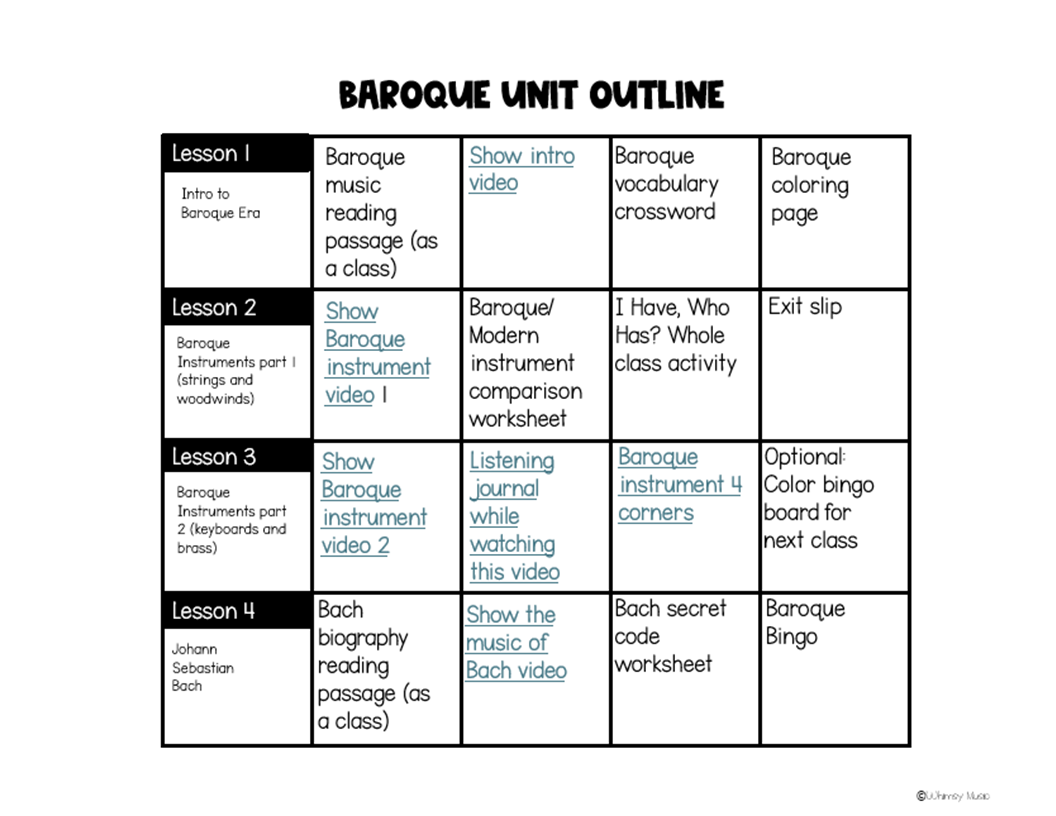
Note: the first plan is meant to be the easiest for the sub to prepare and manage in class. Simply print a few pages and you’re set. Lessons 2-4 require a little more prep, but are more fun for the kids!
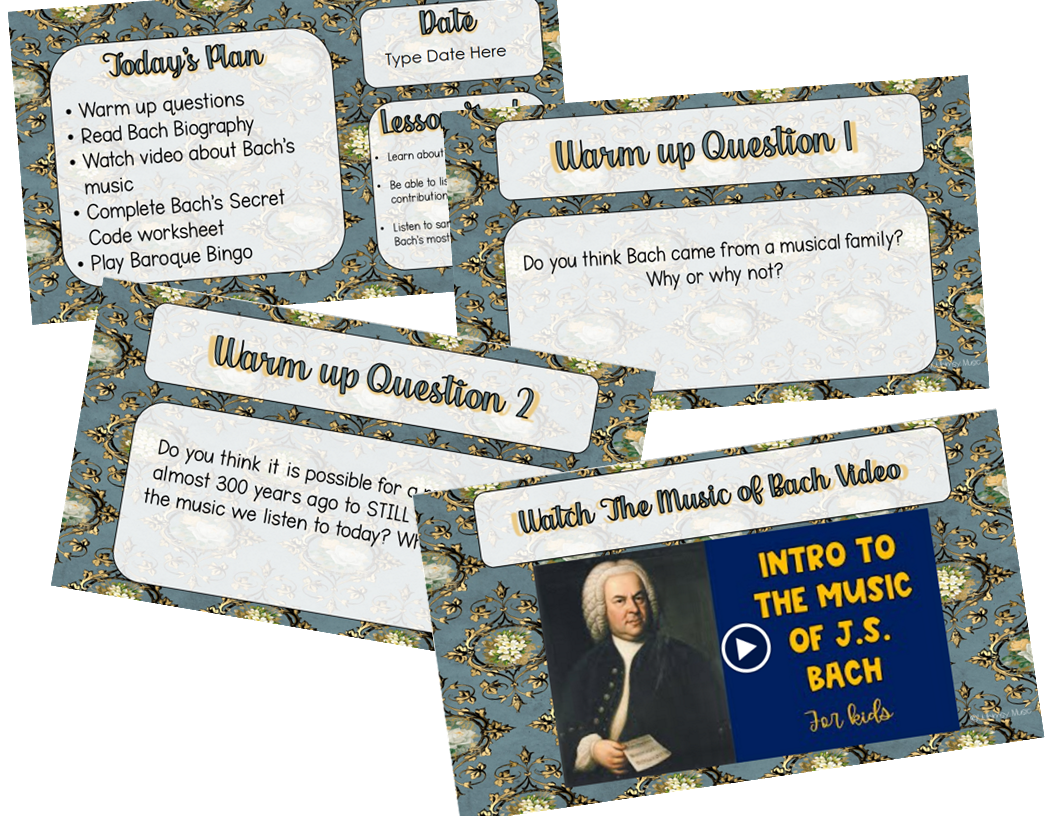
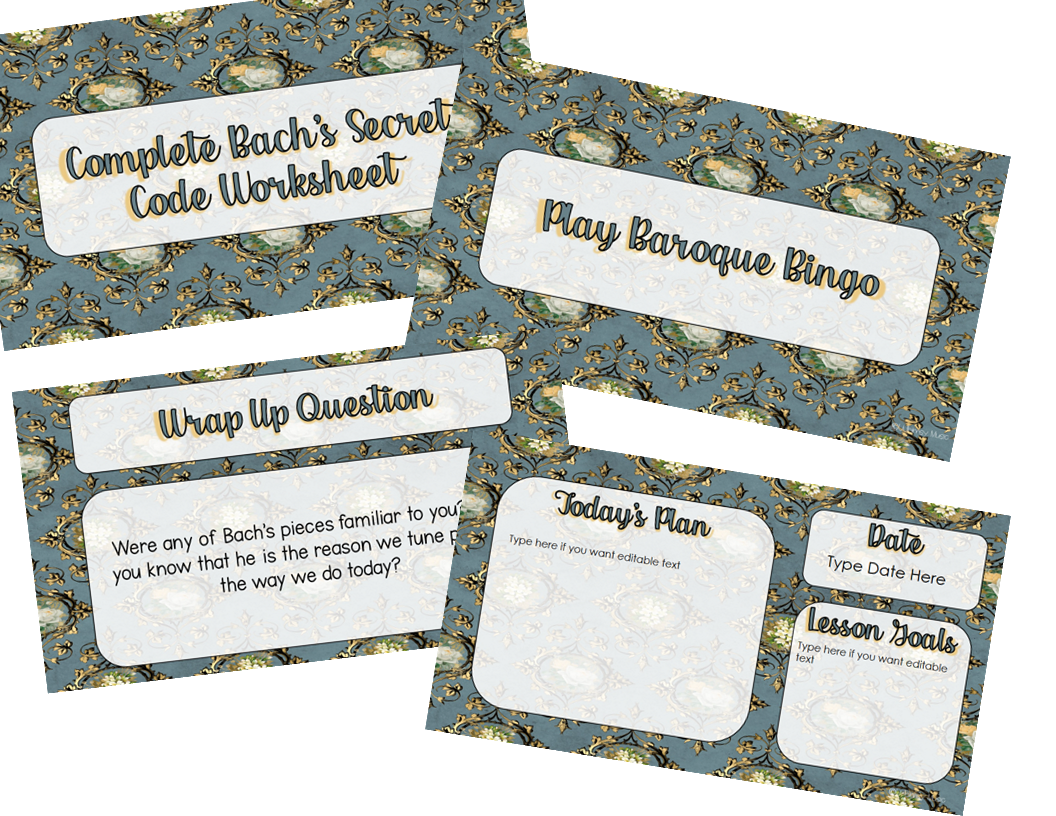
Daily Slides
Each lesson comes with pre-made slides, either through Google Slides or powerpoint. The Google Slides have all videos already inserted. For the powerpoint version, you have access to the video links and can insert them yourself. Dates are editable, and one editable slide is included in each set if you want to customize your slides.
Simple Lesson Plans
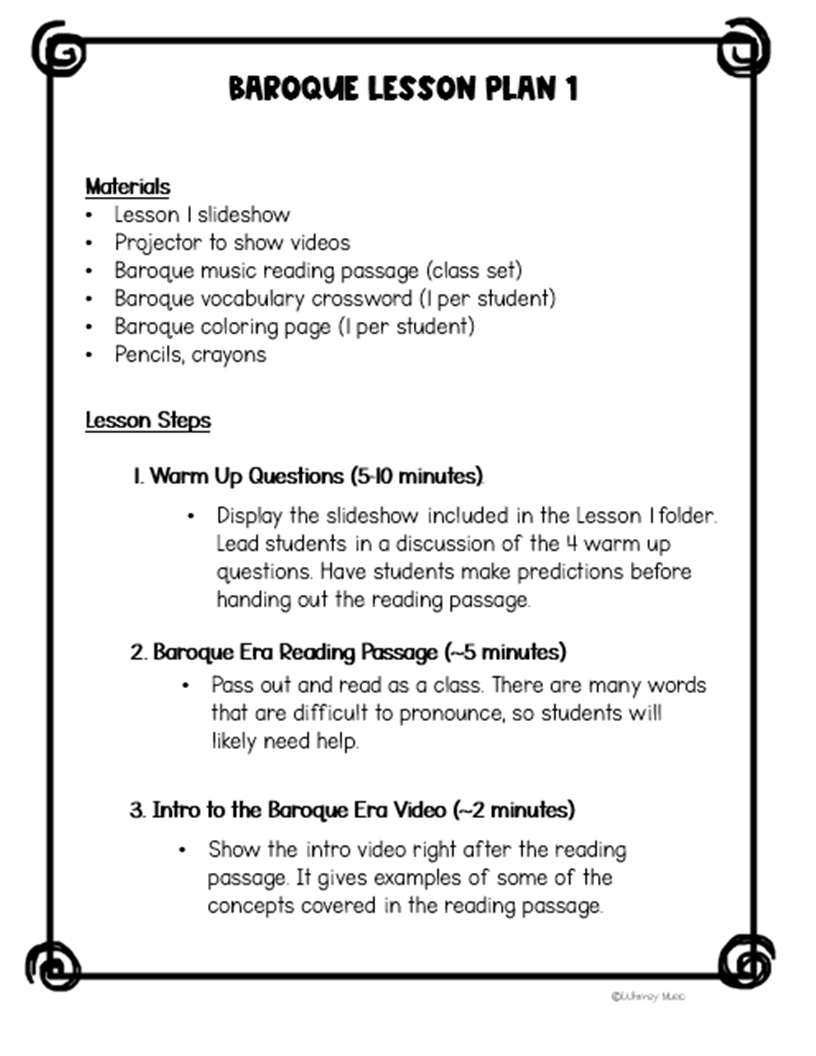
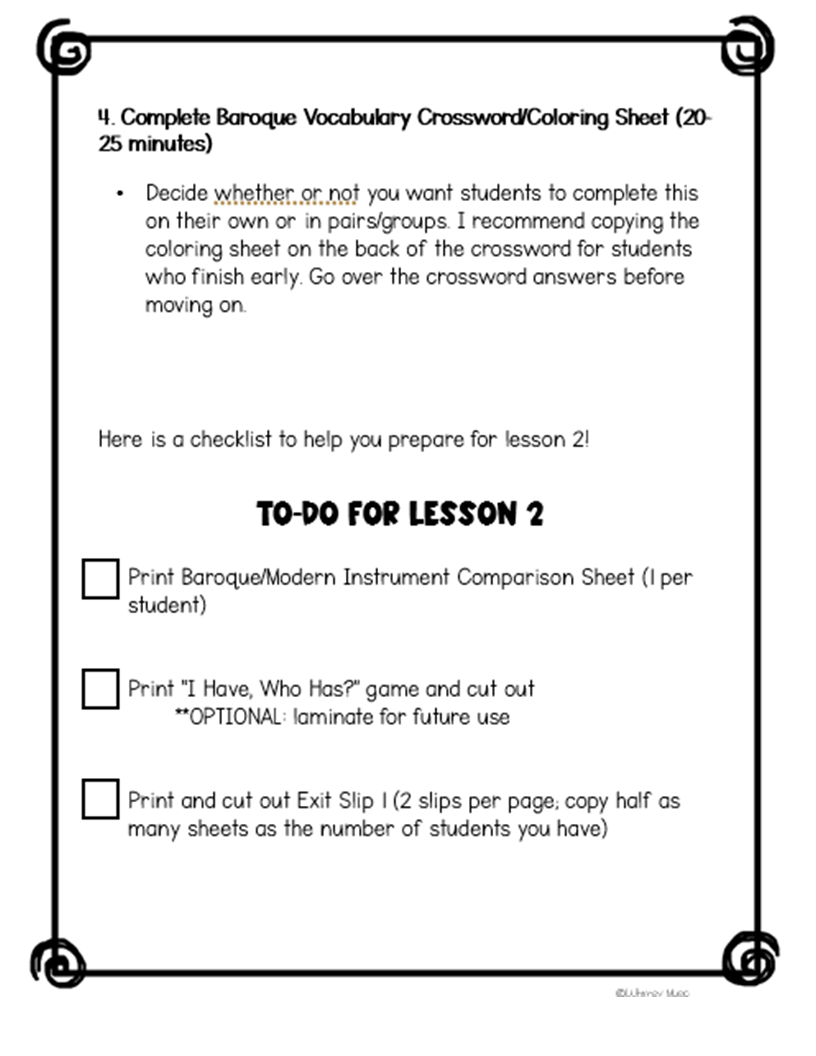
These aren’t Edu 101 lesson plans–a sub doesn’t have time to sift through all the irrelevant information to find the details they actually need. Instead, each lesson includes a plan with materials and lesson steps, plus a checklist to help prepare for the next lesson. That’s it. (If your administrator wants to know whether or not these plans align to national or state standards, they absolutely do. They cover music history, composers, note values, instrument families, and connect to other disciplines such as art and history.)
Double Sided Print File
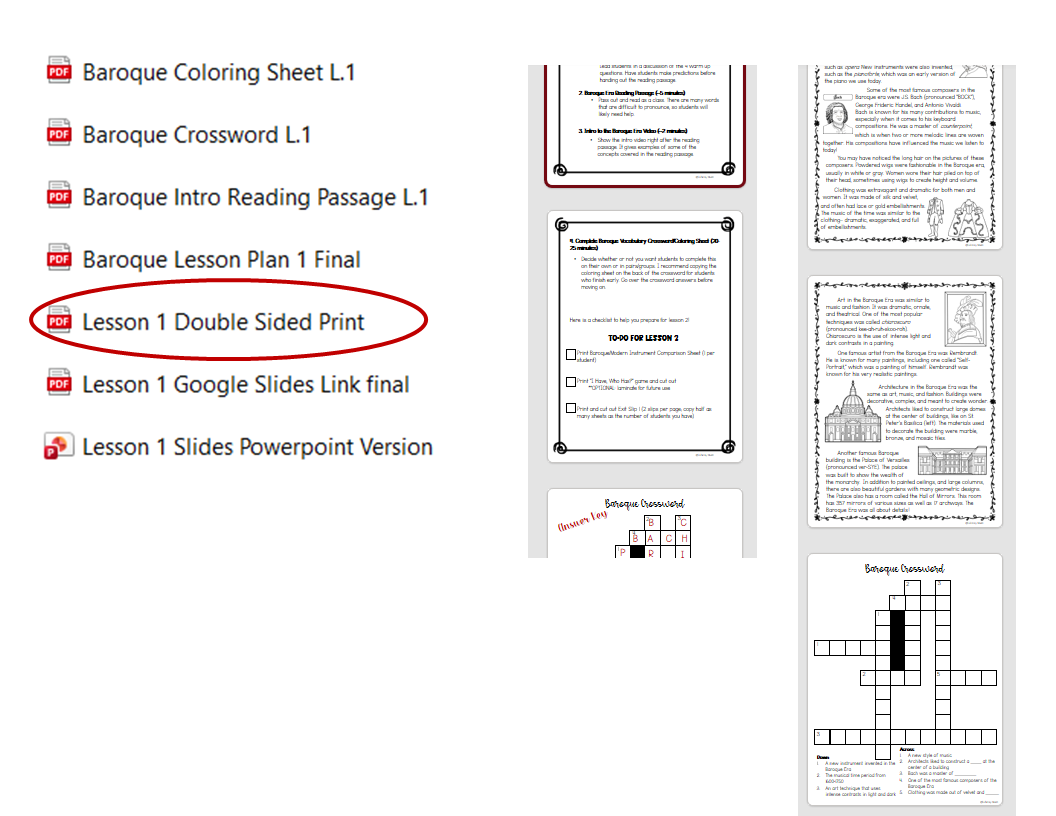
To make planning a little easier, every lesson has a file called “Double Sided Print.” This file contains all printables from the lesson in order with blank pages to allow for correct double sided printing. The sub just has to open the file, click “print double sided,” and all materials will be ready.
Lesson 1: Intro to the Baroque Era
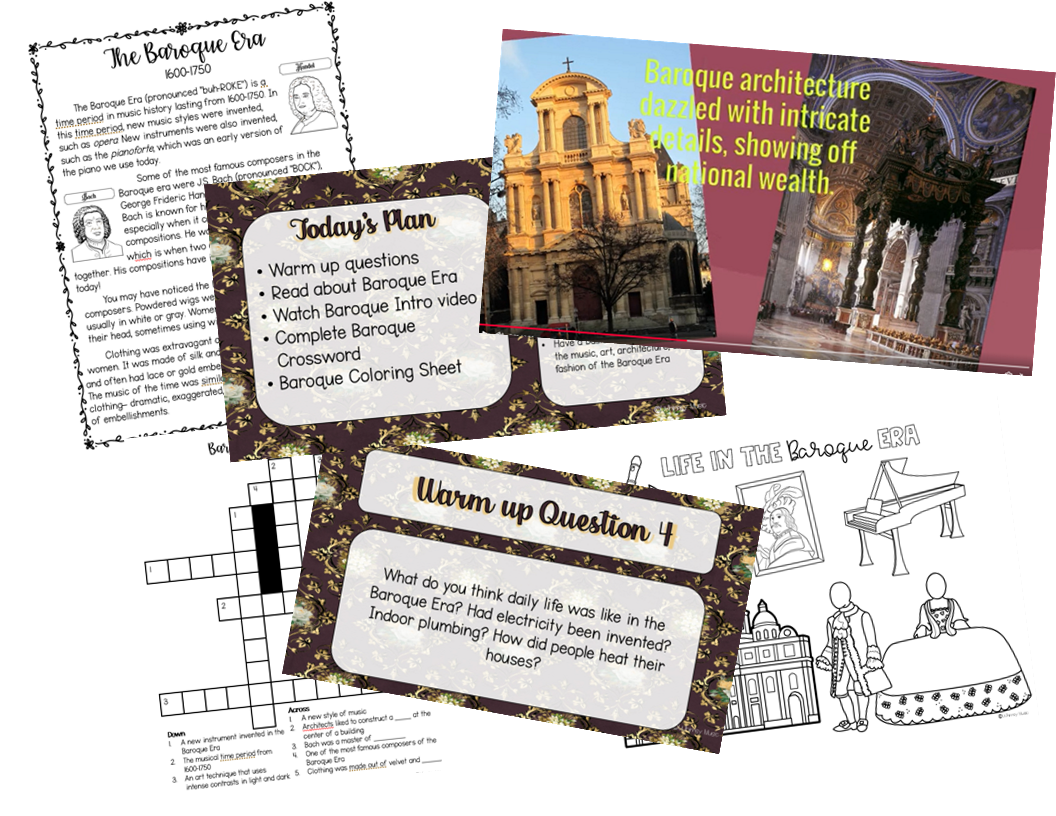
Lesson 1 is was created for a triage situation–an unexpected absence being filled by someone who didn’t know that their next few weeks would be spent in elementary music. This could be used as a single day sub plan because the prep is simple. Print the reading passage, crossword, and coloring sheet, pull up the slides, and you’re ready to go.
This lesson gives an overview of Baroque music (some terms and composers), Baroque fashion (clothing and hair), Baroque art (terms and artists), and Baroque architecture (famous buildings and architectural techniques). The video shows famous paintings, buildings, and images of the composers and artists. It is meant to get students ready for the details they will learn in future lessons, and get them thinking about what life was like in the years 1600-1750.
Lesson 2: String and Woodwind Instruments
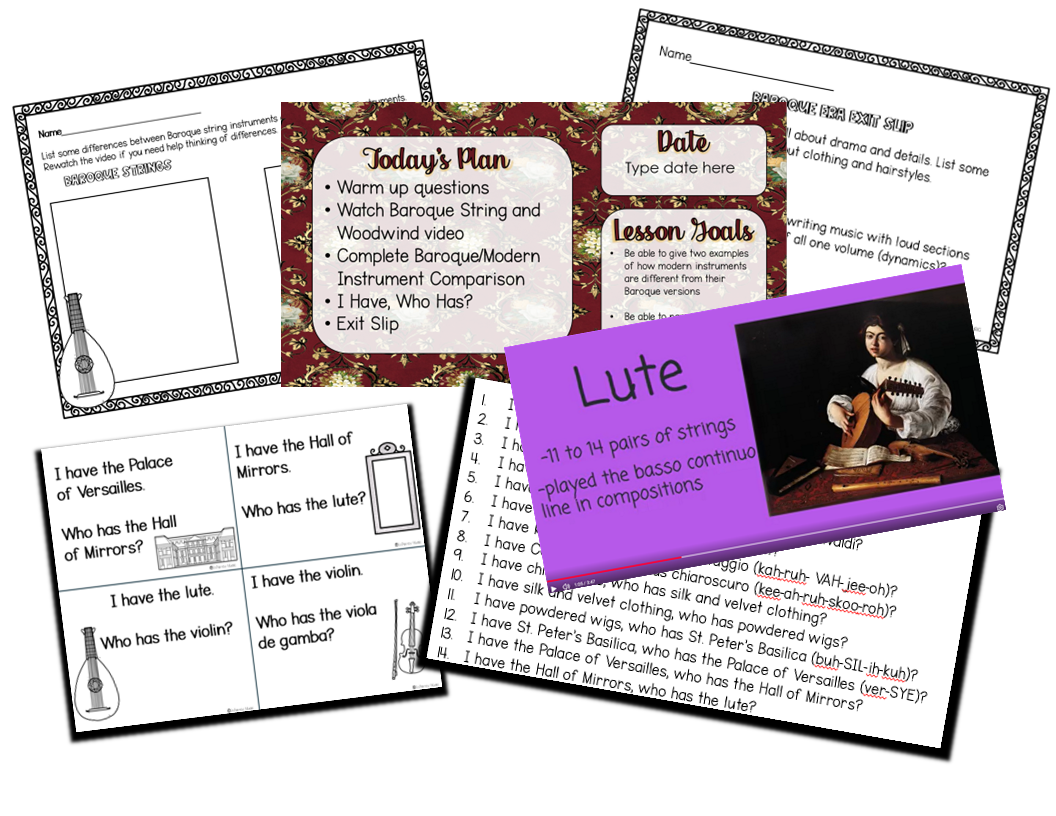
This lesson requires slightly more prep than lesson 1. The sub will need to print the “I Have, Who Has?” game and cut it out in addition to the other printables. Still, this isn’t a high-prep lesson and could be done by anyone.
This lesson includes a video showing photos of real Baroque era instruments as well as audio clips for students to listen to. They will then fill out a modern instrument vs. Baroque instrument comparison worksheet.
My students love the game “I Have, Who Has?” and I’m not even sure why. Every time I’ve played it, over multiple years, they always want to mix up the cards and play again. The good thing about this game is that it gets kids using the vocabulary and attempting to pronounce the words. Since this unit was created for a non-musical sub, a pronunciation guide is included for the sub so they can guide the students in the correct pronunciation of some of the harder words.
Lesson 3: Keyboard and Brass Instruments
(For all the music teachers reading, I always split up woodwind and brass instruments when teaching over several days since those are the two families students tend to confuse the most.)
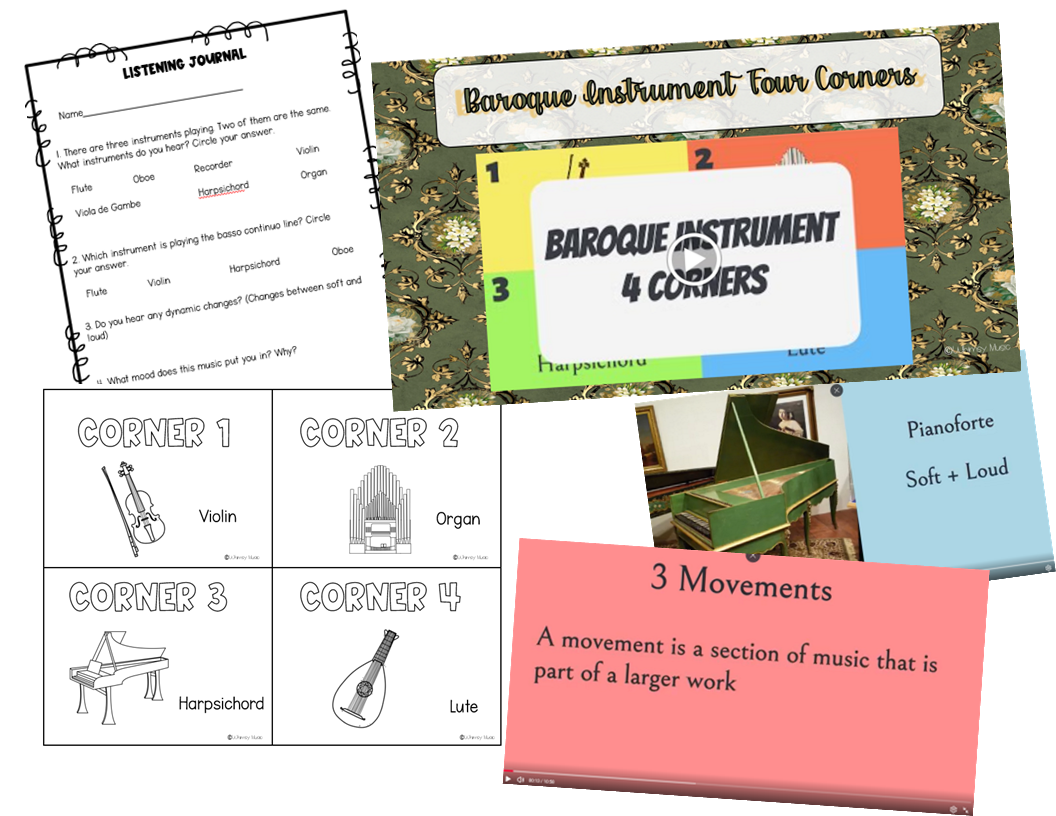
In lesson 3, students will watch another video that includes photos and audio of real Baroque instruments. They will then complete a listening journal, which I anticipate will feel very long to them. The journal includes a few questions to get their minds thinking about what they’re hearing in a little more depth, such as which instruments are playing and what dynamics they hear (don’t worry–the term “dynamics” is defined on the student sheet!) Part of the reason I want the students to listen to a 9 minute piece is to drive home the fact that music in the Baroque Era was entertainment–with no movies, internet, or phones, listening to a 9 minute piece was a fun outing!
If you think this lesson will bore the kids, the fun part happens at the end in the form of Baroque Instrument Four Corners! The sub will have to decide if they want students moving around the room or using the “Seated Four Corners” cards that are included.
Lesson 4: Johann Sebastian Bach
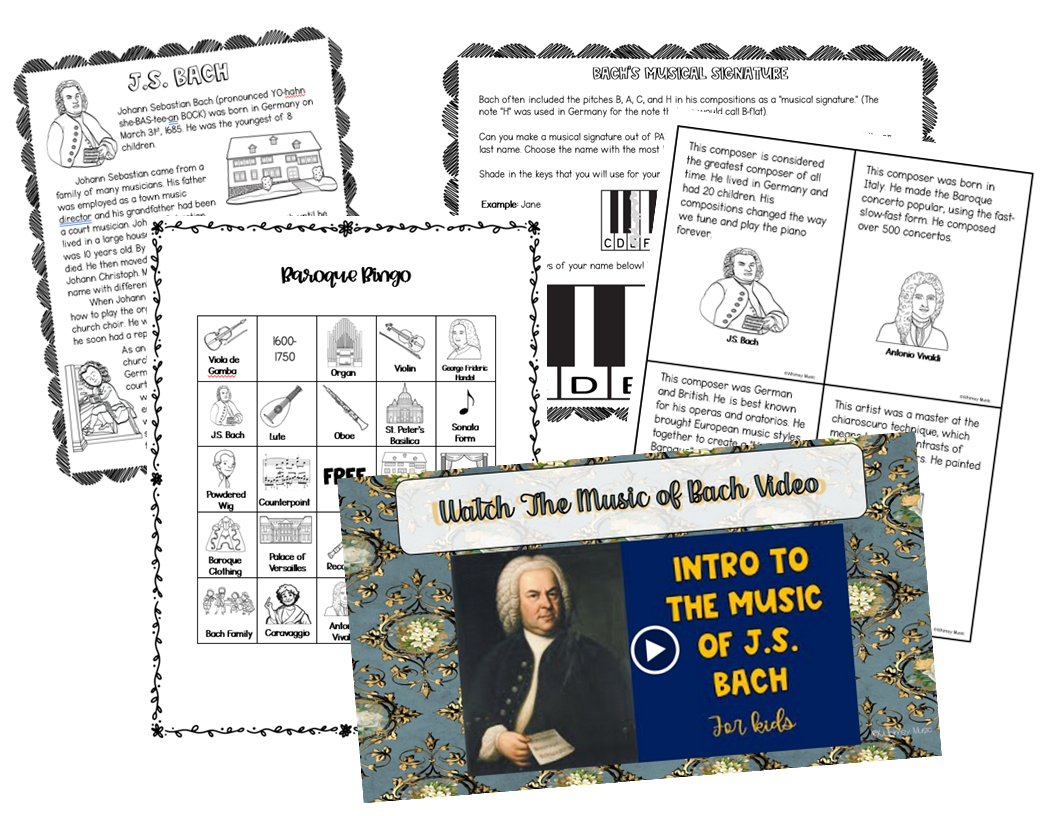
Now we’re getting into the heart of the Baroque Era: J.S. Bach, possibly the most famous composer of all time. But don’t worry, this lesson is not like reading a college music history textbook. I included some facts about Bach that would be interesting to 9-12 year olds, like the fact that Bach used the letters of his name to make a secret code (B=2, A=1, C=3, H=8). Students will take their own name to make secret codes and write rhythms based on their names.
In the video, you’ll hear about why we tune pianos the way we do today, with an audio example of how pianos used to sound before Bach changed keyboard temperament. There are also audio clips of some of the most famous Bach pieces that most students have likely heard before, like Toccata and Fugue in D minor (any non-musicians reading–you have heard this before, I promise!)
Finally, the fun part of the lesson is Baroque Bingo! There are 30 unique bingo boards using all the terms, composers, artists, buildings, and instruments covered so far in this unit. The calling cards have a few sentences for the sub to read and students to try to figure out which bingo space is being called.
More to Come
This unit will eventually be 10 lessons long and will include a readers theater, a small group game, an escape room, and more! For now, you can get the Long Term Music Sub Plan on the Baroque Era for $10. The price will increase each time a lesson is added, but you’ll have access for free. Just download the file again! If you are looking for a set of plans that is easy enough for anyone to implement, helps the students learn about music, and is fun, this is it!